We are offering computer classes for … Beyond the code 6th-12th grades. STEM classes focused on technology including digital forensics, cyber security, IoT, and Linux.
Curriculum Types
Podcast: Play in new window | Download
Subscribe: Apple Podcasts | RSS
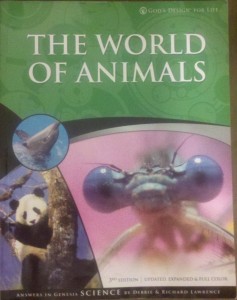
Giveaway: God’s Design for Life: The World of Animals
Details: This is a $24.99 value. Shipping within the USA will be paid by us.
How To Enter: Register for our mailing list using the form below.
Deadline to enter: April 2, 2012 Midnight Eastern Time
Bouns Entry Methods:
Tweet a link to our blog**
Link to us on Facebook**
**Please comment below in this post and let us know that you did these bonus actions.
Our goal in this episode is to equip you with some basic knowledge of the types of curriculum with some pros and cons of each. This is so that you can identify what your educational styles are and what some curricula choices are that matches your style. This BY NO MEANS is intended to be an an all inclusive list! There’s no way to know all that is available on the market- it changes too fast!
If you learn the basic categories that most curriculum falls into then you can identify it yourself. This is especially helpful when you go to curriculum fairs, homeschool conventions, or think you might like to try your friend’s favorite curriculum.
I personally believe that the most rounded education comes from using a variety of types. EVERY product available is going to have holes or at the very least, disadvantages. My best friend watched me run in circles trying to find the “perfect” curriculum when I began home schooling. I did finally realize there was no such thing because I didn’t write it (coming up with my own thing was time consuming, exhausting and at times- expensive).
I have also learned there is a “season” for every type of curriculum to be used- by most people. For example, a workbook curriculum might be necessary in one subject or in a season of context (new baby or moving) even if it is not your preferred method. Or you might need to use a unit approach to get your reluctant learner excited about learning.
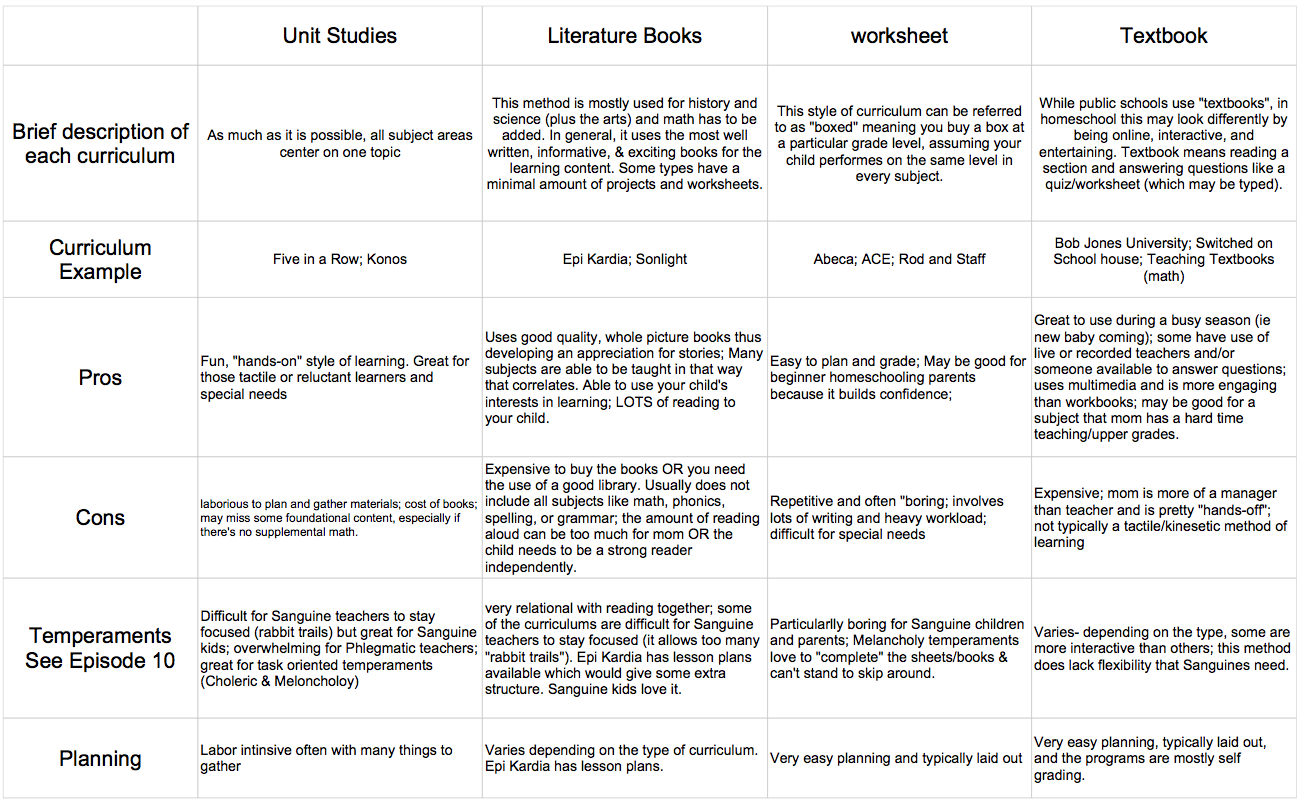
The 4 types of curriculum that we are going to compare are:
Workbook*
Textbook*
Unit Study
Literature Books
*Because of the similarities between these two, it can be difficult to define the difference because most textbooks also have a workbook component and vice versa.
Below is a chart that we mentioned in this episode of the HSSN Podcast. This chart shows the Pros, Cons, Planning, Temperament, and example notes for each homeschool curriculum type.
Also mentioned in this episode is an episode of the DaddyLife.net Podcast discussing Love Languages and HSSN Podcast Episode 10 on Temperaments.
Subscribe:
You can subscribe to this podcast via iTunes and/or RSS below:


Juggling a Houseful with Learning Stations
“Children are a blessing from the Lord; they are a reward from him.”
Psalm 127:3 NLT
Ever been at your whits end trying to juggle your “blessings” all the while accomplish schooling with one or more of those same blessings?! Time management is the key!
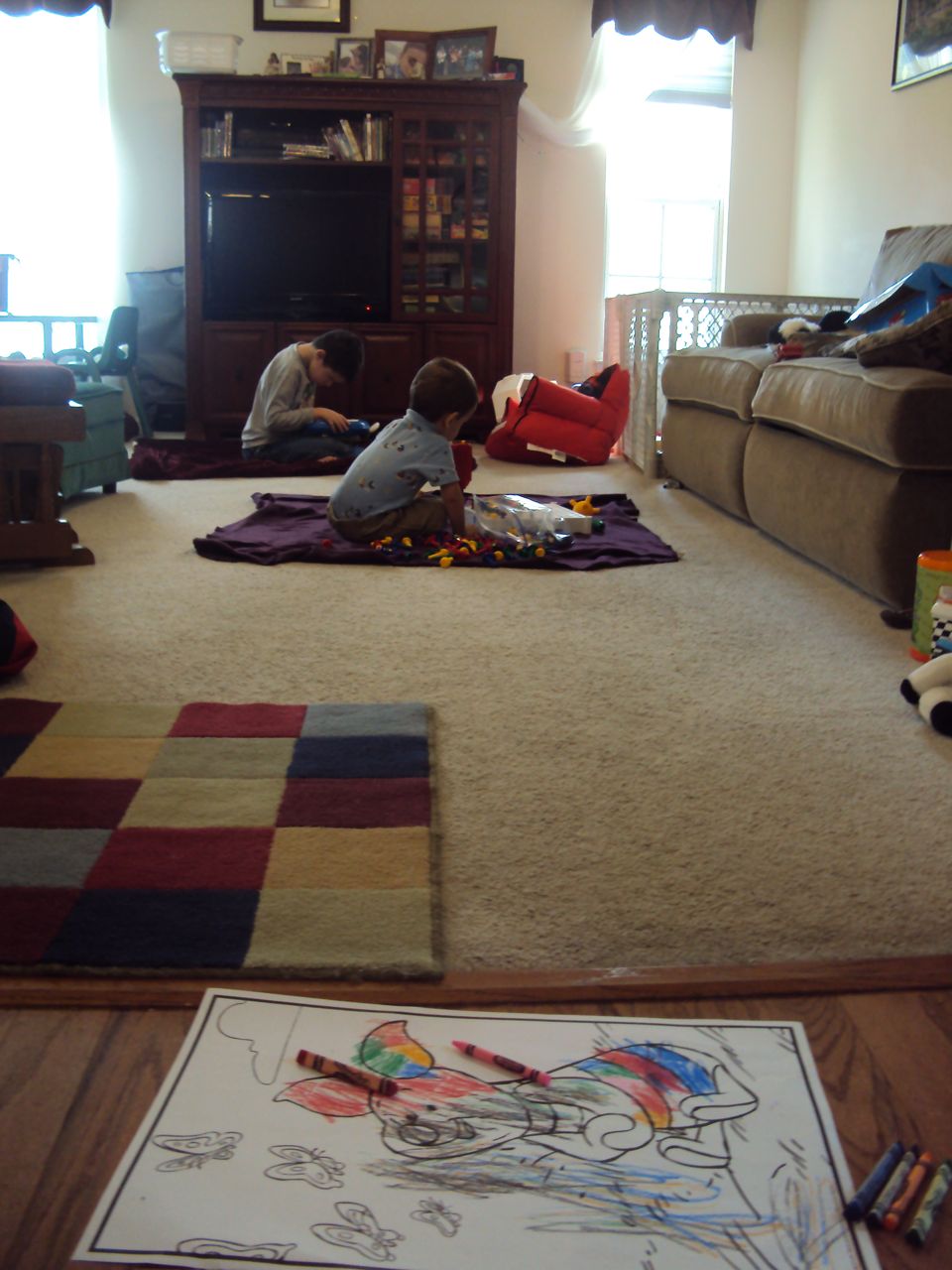
We’ve talked about Structure and Routine in Episode 5 and a part of that structure is training your children to stay within boundaries set by mom. We started with training “blanket time” for the boys when they became mobile. I would put down a blanket with a few toys on it and set a timer. Each time they went to crawl off, I would redirect them back on the blanket. If you keep some toys set aside to use for blanket time then they maintain their novelty and can successfully lengthen this time once it has been trained.
With a houseful of siblings, that blanket time is often seen as a relief to have their “own” space marked off as theirs! I have found that “blanket time” doesn’t HAVE to be just for toddlers, in fact it illuminated an area that needed training in my 4 ½ year old today. You will notice there is a child missing from the picture above because he was on his bed working on his obeying without complaining as he was not happy with the choice of activity I gave him (coloring sheet). This is character training, and is the main reason our family has decided to homeschool. This is also school!
There are several different ways to use the blanket boundaries for school teaching time and for structuring preschoolers so you HAVE TIME to teach (and yes, house cleaning too!)
I have taken that blanket time training (which I learned about from On Becoming Toddlerwise
Another use is to give the children relatively independent activities so mom can have some one-on-one time to work on a subject with another child. Do realize that if you have toddlers, mom needs to be able to pause this instruction time to redirect the little ones (so save the very difficult subjects for when the little ones are napping or resting on their beds). If mom doesn’t insist the little ones stay on the blanket, then they will stop doing so and this tool is no longer usable.
 I also use these boundaries and small, quiet toys (what my son’s occupational therapist calls “fidgets”) for when I have a good amount of reading aloud to them. We start reading on the couch and I dismiss them to their blankets once they have done all the sitting I can reasonably expect. It looks sort of like a train making stops letting off passengers. I use this method instead of having the child go play somewhere else because if they are in the same room they are still absorbing information. The only caveat is that they play quietly or they loose the freedom to play with their “fidget”. I use mainly sensory items as fidgets (meaning they are squishy, stretchy, or textured). You can check out a special needs catalogue such as Abilitations or try a craft store like Michaels. Our favorite fidgets are various size pompoms. This method works great for my special needs son and for the younger ones (4-6 year olds) but NOT for the toddlers! When I have a lot of reading that is when I put the toddler in his Pack and Play in the other room with a few toys (basically “blanket time” but with the physical boundaries).
 Ideas for learning centers:
Leappad electronic games with educational game cartridges (many of these are retired by Leap Frog but are worth the hunt)
TAG Reader (also by Leap Frog)
Discovery Toys “Playful Patterns”
Discovery Toys “Learning Bugs”
Discovery Toys “Think it Through Tiles”
Tangrams with patterns
Lacing cards – fine motor skills
Design & Drill – copying patterns & fine motor
File Folder Games
puzzles
coloring or activity book
picture books


God’s Design Science Series – Review
Podcast: Play in new window | Download
Subscribe: Apple Podcasts | RSS
One of the most difficult decisions I face in homeschooling is choosing a curriculum among the abundance of choices available. Ironically, it’s also one of the major “benefits” I see that Homeschooling offers!
It is difficult for a few reasons. One is that I personally do best being able to put my hands on it to view the curriculum in it’s entirety (rather than viewing a lesson or unit that is available to view online). Another reason is that I HATE wasting money! Finally, there are many review websites and blogs out there but I found some of the reviews to be written by the publishers of the curriculum (I didn’t want a sales pitch) and the other reviews would be all over the place. I realize that no one curriculum will be a perfect fit for everyone but reading some raving reviews right next to some obviously disgruntled reviews for the same curriculum was frustrating and confusing for me.
I am going to do my best to give a factual review of the God’s Design for Science series. First let’s start with some curriculum details.
This series is written by Debbie & Richard Lawrence and published by Answers in Genesis. It is divided into 4 theme areas: Chemistry and Ecology (3-8th), Physical World (3-8th), Heaven and Earth (1-8th), and Life (1-8th). Each of these themes has three individual books that goes into more specific content. For example the God’s Design for Life has “World of Plants”, “World of Animals”, and “Human Body”. It takes about a year to complete the three books so the whole curriculum series would be four years of science.
Advantages:
- The biggest advantage, in my opinion, is that it is multi grade level in the SAME book. EACH lesson is written with a “beginner” section that fits K-2nd really well, a section for 3-8th, and some “challenge” sections designed for 6-8th but my third grader can often complete. Included are “Special Features” articles which are fun facts or biographies of scientists who have contributed to the subject.
- It is creation based (meaning it is completely evolution theory free) and examples of God’s design of our world is woven throughout the curriculum.
- Comprehension questions are included for every level and in every lesson (the teacher’s book has the answers).
- There are added activities for each lesson like experiments, worksheets, research projects, and some charades/art. Any worksheets and tests are on the CD ROM that is included with each individual book.
- MOST activities do not require much prep time or materials (and the materials they do require are ones you would have on hand or from a grocery store).
- It lends well to pulling in additional picture books or activities.
- The cost is pretty low and you have the option of buying per book, per theme series, or the whole series.
Disadvantages
- The unit tests cover content for all the grade levels. If your child doesn’t do the “challenge” sections then there will be questions that he/she will not know on the tests. Likewise, the tests are very difficult for the K-2nd “beginner” level as much of the content would be foreign to them.
- The content of each lesson is light (at least for the “World of Animals” book but that may not be the case for “Properties of Atoms and Molecules” book!)
- If you want a science curriculum that is highly WORKSHEET OR EXPERIMENT based then this NOT for you!
For our family, the advantages outweigh the disadvantages. I realize that no curriculum is perfect. You may however, want to check God’s Design out!
Also mentioned in this episode was the Teach Them Diligently Convention for Christian homeschoolers. We highly recommend this convention if you are going to be anywhere near the upstate of South Carolina between March 15-17.
Subscribe:
You can subscribe to this podcast via iTunes and/or RSS below:
- « Previous Page
- 1
- …
- 7
- 8
- 9
- 10
- 11
- …
- 13
- Next Page »