Home School Support Network

Helping homeschool families raise capable, confident kids.

  • Home
  • Podcast
  • About this site
  • About the Osbornes
  • Online Academy
    • Registration Page
    • Frequently Asked Questions
    • Class Login
  • Join the Community!
  • Contact Us
  • Episode List
Registration is Open

Hank Osborne May 29, 2015

Registration is Open

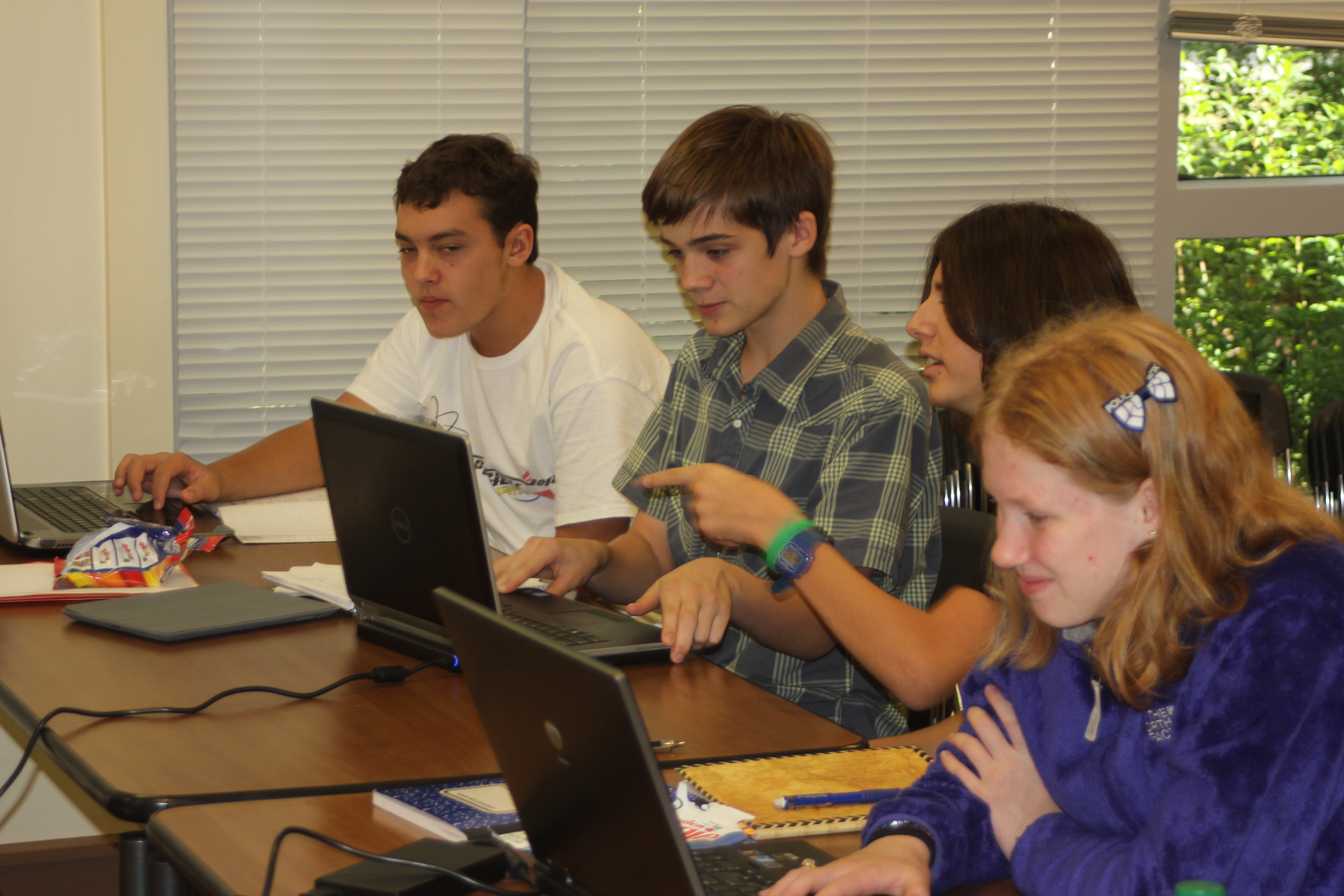
We have opened up registration for the new Introduction to Computers and Security on demand class. Computer and Security Class for Teens
This class is intended for middle and high school students interested in enhancing their knowledge, skills, and abilities in Information Technology or Cyber Security. All students can benefit from this course regardless of their future education or career plans. Students will learn how computer systems work. They will learn how to troubleshoot computer systems using system administration skills on Microsoft, Apple, and Linux operating systems. The class will be delivered via recorded instructional videos with additional assignments and quizzes. Students and parents will have access to grades using the Home School Support Network (HSSN) Online Academy Learning Management Software (LMS).

What are parents of previous students saying about this course?

“My son has been involved in this since last summer and has learned so much and has built friendships along the way. Hank Osborne is a godly man who has been a wonderful encouragement to my son and he has inspired to him learn more.” Laura F. (Charleston, SC)

UPDATE: The class has been published as of June 30, 2015. Visit the Online Academy page for more information about this course.

Check HERE to register now!

Filed Under: Academy

Internships with US Navy Labs – High School and College

Hank Osborne November 10, 2014

Internships with US Navy Labs – High School and College

There are two programs aimed at providing paid internships to high school and college students with the Department of Navy (D0N) through the Office of Naval Research (ONR). The first program targets high school students and is called the Science and Engineering Apprenticeship Program (SEAP). The second targets both undergraduate and graduate college students and is called Naval Research Enterprise Internship Program (NREIP). These programs are great opportunities for students to experience the types of environments and work they can expect to participate in once they graduate from college. I work for SPAWAR Atlantic for my day job and have an opportunity to interact with these interns during the Summer. This is an outstanding opportunity if your child is interested in Science, Math, Engineering, and Technology (STEM).

Here are the basic facts:

What: Paid Internships with the US Navy

Who: High School Students (age requirements…see notes below under SEAP) and College Students

When: Summer 2015 (Application deadline 12/19/2014)

Where: SPAWAR Atlantic, Charleston, SC *

*Additional locations in the following states:  AZ, CO, CA, CT, DC, FL, HI, IN, MD, MS, NJ, PA, RI, TX, VA

It is my understanding that the programs try to announce the internship recipients by mid-February each year. The application is fairly comprehensive so I recommend your child get started ASAP if they are interested. Some of the information that will be required during the application process:

  • Contact Information Citizenship & Demographics Program Information Education
  • Awards & Honors
  • Career Goals
  • Academic Interests
  • Research Experience Technical Skills Employment
  • References
  • Publicity Information

Student will also have to provide a copy of transcripts.

There’s more information about these programs and more on the American Society for Engineering Education (ASEE) web site. 

High School Students

Science and Engineering Apprenticeship Program (SEAP)


This program offers over 350 students internships for an 8 week period during the summer at one of 25 locations around the country. High school students who have completed at least Grade 9. A graduating senior is eligible to apply. Students must be 16 years of age for most laboratories. Some laboratories may take students as young as 15. The SEAP Participating Labs page for SPAWAW says that SPAWAR requires students to be at least 17 years of age, but I am told that this can be waived for some positions. I would recommend that interested students who will 16 by the Summer go ahead and apply. Please visit the SEAP web site to get details and apply for the program. The deadline to apply for Summer 2015 internships is December 19th, 2014.

College Students

Naval Research Enterprise Internship Program (NREIP)


NREIP provides competitive research internships to approximately 275 college students (200 undergraduate students and 75 graduate students) each year. Participating students  spend ten weeks during the summer conducting research at approximately 29 DoN laboratories. Please visit the NREIP web site to get details and apply for the program. The deadline to apply for Summer 2015 internships is December 19th, 2014.

Filed Under: General Tagged With: College, Math, Science, STEM

A typical day using STEPS

Hank Osborne March 14, 2013

A typical day using STEPS

What does your typical day look like using STEPS (Sequential Teaching of Explicit Phonics and Spelling)?

I was recently asked this question during a parent conference. Now here’s the context…

I have been teaching the STEPS program (similar to the SWR program) in my homeschool co-op since September 2012. We meet only once a week for 50 minutes. I have had to modify many things to fit this abbreviated schedule so no I have not followed either program as it was “designed.” Yet the results are still there!

It was during a conference that a parent stated (something to the effect of) for this program to really work, it is obvious there needs to be more work done at home than what I assign. I was then asked if I could make a checklist of the work we do in a week.  I am posting the checklist here to help others also. Some of the items may need to be crossed off if you haven’t gotten to that point (like spelling words) while other items can be added.
STEPS Schedule for home
Download a printable copy of the above chart from Google Docs

Memorizing Vs. Analyzing Spelling Words

The main difference between STEPS/SWR and other curriculum is that the child is trained to use the knowledge of the sounds and letters (called phonograms) to spell words. He learns to spell a word based on the phonograms he hears PLUS applying the spelling rules. He has to make decisions on which phonograms to use and then analyze why a word is spelled the way it is (with highlights). Most reading programs use a memorization method often with no rhyme or reason on why a word is spelled or read a certain way (and the child “brain dumps” the information after the spelling quiz!)

One of the best methods to learn spelling words is to practice “sounding them for spelling” and to blend the sounds together to “read it”. We talk about the red highlights and how they make the word sound.  We discuss the spelling rules that apply to the words. I have made a short video of my 5 year old son practicing his spelling words because a picture truly is worth a thousand words!

A video of Josiah sounding for spelling and reading:

Notice that the focus is on the sounds the letters make rather than the letter names. When you are trying to read and spell a word, knowing the sounds to automatic is a must because most letters (consonants) do not say their name. For example, the letter B never says “b” in a word! So rather than focusing on spelling “bed” by saying the letter names b-e-d, the child should focus instead on the sounds /b/-/e/-/d/. When a child can spell “bed” rest assured he can read it also!

Filed Under: Handwriting, Phonics, Reading, Spelling, Video Tagged With: Explicit Phonics, Handwriting, How-to, Methods, Reading, Spelling

  • « Previous Page
  • 1
  • 2
  • 3
  • 4
  • …
  • 8
  • Next Page »

Categories

  • Academy
  • Books
  • Chores
  • Curriculum
  • Fun
  • General
  • Giveaway
  • Handwriting
  • Methods
  • Phonics
  • Podcast
  • Reading
  • Science
  • Special Needs
  • Spelling
  • Time Management
  • Uncategorized
  • Video

Recent Comments

  • michael shestko on Teaching Letter Sounds Through Writing
  • Dawn Griffin on South Carolina Home School Law
  • Cursive First Handwriting Curriculum - Janelle Knutson on Teaching Reading and Writing with Cursive First
  • Sadelina Dowling on Teaching Reading and Writing with Cursive First
  • Interview with Julie Bogart of Brave Writer, pt 2 (Ep #60, 11/29/15) - Savvy Homeschool Moms podcast on Teaching Reading and Writing with Cursive First

RSS Caden’s Page

  • Oxygen Off Surgery On
  • Discharge in sight
  • Numbers 36 – 7 – 5 – 8
  • Rough 24 Hours
  • Ups and Downs with a little drama
  • Double Whammy Day 2

RSS Daddy Life

  • Blocking Inappropriate Ads
  • Mom’s Notes on MP3
  • The Root is at Home
  • GFI National Family Conference 2013
  • Raising Girls

Find us on Social Media

Twitter
Facebook
Google+

Blogroll

  • Documentation
  • Plugins
  • Suggest Ideas
  • Support Forum
  • Themes
  • WordPress Blog
  • WordPress Planet
  • iTunes
  • Podcast feed
  • Twitter
  • Facebook
  • Pinterest
  • YouTube
  • Subscribe to our newsletter
  • Blog RSS
  • Google+

Copyright © 2026 · Streamline Pro Theme on Genesis Framework · WordPress · Log in